
By John Bkila (NewsHooked) | Friday, March 9, 2018 at 07:30
I would hardly be the first to say the Brits sometimes make great TV.
One such series, admittedly an obsession of mine, is the British crime drama Broadchurch, which wrapped up its third season in April 2017.
One episode featured a conversation between two characters that hit closer to home than I would’ve liked.
A 30-year veteran journalist and editor of the Broadchurch Echo, the community newspaper of a fictitious small town (Broadchurch) for more than a century, was meeting with her much younger boss at the larger corporate company that owns the publication.
It starts off with editor, Maggie, demanding why her front page — news of a plan to bring 300 new homes to Broadchurch — was replaced by a photo of kittens escaping from a bin — what Maggie calls Page 5 filler, but her boss describes as “feel-good and it sells.”
“The fact is people need to have their own lives reflected — that’s the whole point of a community newspaper…”
The conversation quickly turns into a larger, macrocosmic problem — falling profitability causing newspapers, as the records of life for the communities they serve, to (at best) shift their defining priorities or (at worst) disappear.
Maggie, who lost her only reporter to a national tabloid, is told her local office will be closed once its lease is up. The paper will go on, but offer content from a wider area using pooled resources — “we’re redefining what we mean by local,” Maggie hears from her ‘Powers That Be’.
Sadly, that’s not fiction — it’s a reality many community newspapers are facing. Just look at the mass culling of nearly 37 community papers in a swap between Torstar and Postmedia back in November 2017.

The fact is people need to have their own lives reflected — that’s the whole point of a community newspaper, Maggie demands. But that falls on the deaf ears of the editor’s superior, who replies, “If it’s so important to people, then maybe they should be buying it in greater numbers. Times change, Maggie. Don’t get left behind.”
And that’s it, isn’t it? Newspapers have found themselves consistently behind the eight ball, struggling to keep up with the times and trends — a far cry from when they were the mechanisms that created change.
When did this role reversal into inferiority happen?
It could be a shift in focus that has pulled newspapers into becoming the chasers of trends, trying to catch up, becoming obsessed with attracting and maintaining audience numbers at whatever the cost — rather than chasing the stories that matter most to the people it serves.
But the federal government may have given a glimmer of hope after it recently announced in its federal budget $50 million over the next five years will go NGOs to support local journalism and pledged to look at new models that would allow “private giving and philanthropic support for trusted, professional, non-profit news and local journalism.”

And maybe that’s where community journalism will find the help it needs to survive as a whole — with its integrity, morality and priorities intact.
The communities they serve need to invest in its survival or else we may find our friendly-neighbourhood journalists and newspapers going the way of the dodo — arguably, at a time when we need them the most.
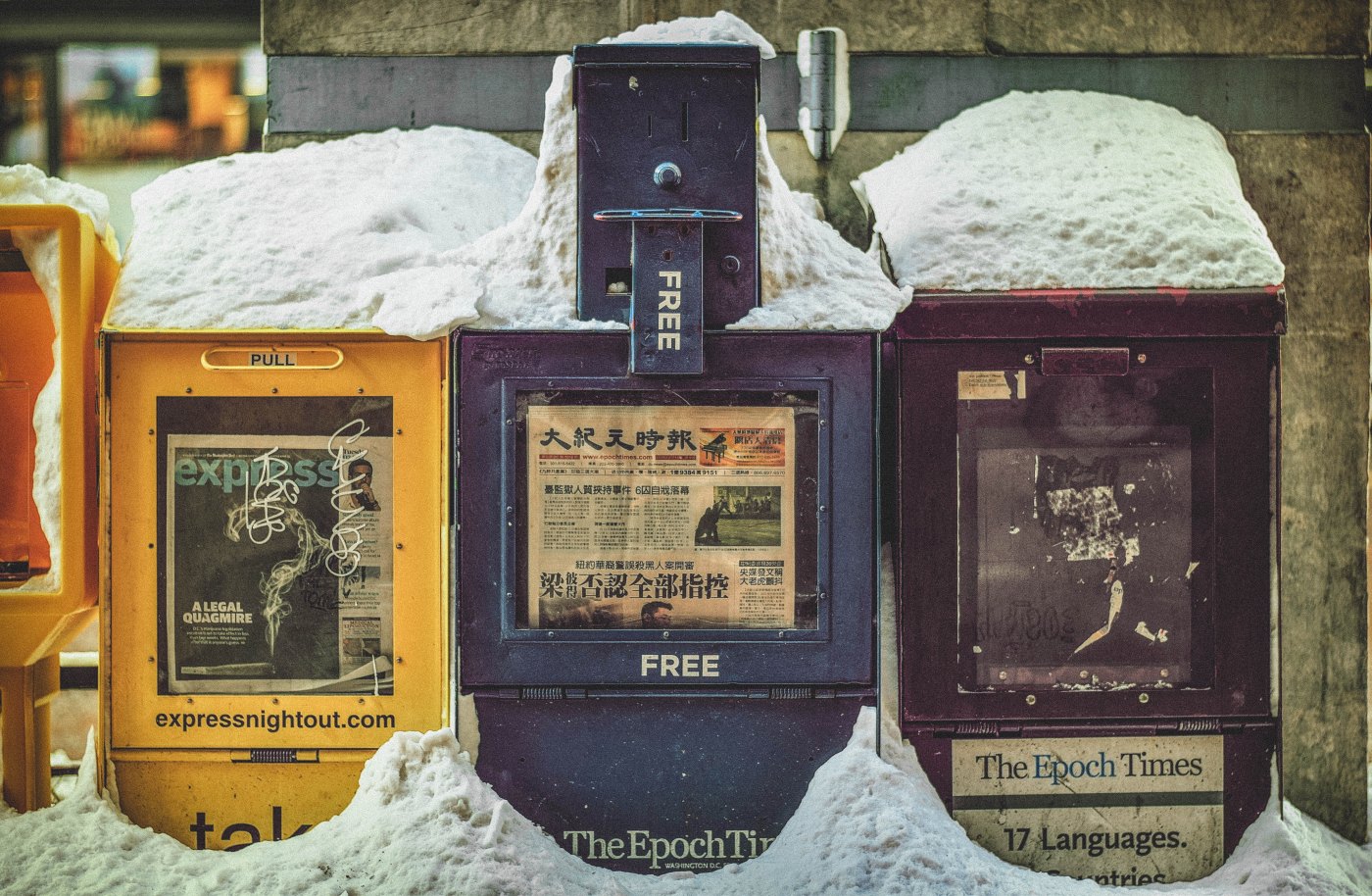
Featured top photo “Newspaper, snow, sign and snowfall” by Matt Popovich / Unsplash
 NewsHooked
Leave a comment